Books Sublimation SVG Bundle Review
As a designer who spends more time looking at stitch density charts than actual books, I approach every new design asset with a healthy dose of skepticism. The market is saturated with clip art that looks beautiful on a screen but falls apart under the needle. When I first pulled up the Books Sublimation SVG Bundle, my initial reaction was curiosity mixed with caution. The description promises hand-drawn book stacks, cozy illustrations, and vintage book art in high-resolution PNGs ready for sublimation. But can these digital assets translate into a viable machine embroidery design for a serious craft business?
I decided to put this bundle through its paces. My goal was to determine if these graphics could serve as effective templates for digitizing or direct printing applications, specifically for a small boutique line of literary-themed merchandise. This review isn’t just about aesthetics; it’s about practical application, customer appeal, and whether this Graphics collection holds up in a real-world Crafts environment.
The Visual Personality: Cozy Meets Commercial
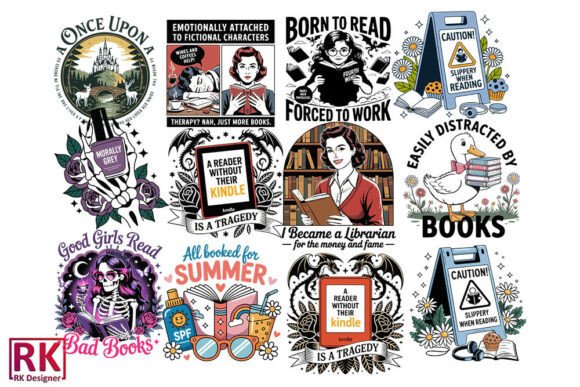
The mood of this bundle is distinctly warm. In the world of embroidery, "cozy" is a powerful keyword. These designs capture the essence of a rainy Sunday afternoon with a cup of coffee and a novel. The hand-drawn aesthetic gives it an organic feel that mass-produced machine prints often lack. For an Etsy seller or small shop product owner, this visual personality is gold. It suggests authenticity and care.
The variety within the bundle—from vintage book art to modern coffee-and-books themes—allows for a cohesive yet diverse collection. You aren’t limited to one narrow niche. A stack of worn leather-bound books appeals to the classicist, while a stylized reading quote appeals to the modern minimalist. This versatility means you can target multiple buyer personas without diluting your brand identity. The layout of the individual files is clean, which is crucial when preparing design assets for further editing or digitization.
Real-World Application: The Custom Tote Bag Scenario
Let’s imagine a specific project. You are preparing for a local craft fair and want to create a custom embroidered tote bag design that screams "literary lover." You choose a natural canvas tote and decide to feature a central graphic from this bundle. Perhaps it’s a detailed illustration of a reading nook with a steaming mug.
If you are using this as a sublimation transfer, the high-resolution PNG ensures that the ink will hold its detail. However, many designers use these images as references for creating an embroidery file. Here is where the practical judgment comes in. The intricate lines of a hand-drawn book spine need to be converted into satin stitches or fill stitches carefully. If the original image has too much fine detail, the final finished product might look muddy unless you simplify the vector path before stitching.
For a sweatshirt embroidery project, this theme works exceptionally well. Placing a smaller, simplified version of a book stack on the chest pocket area creates a subtle, sophisticated look. It’s not shouting for attention; it’s whispering to those who know. That kind of subtlety builds brand consistency and professional trust. Buyers appreciate products that feel curated rather than generic.
Technical Considerations for Embroidery Designers
While the visuals are strong, we must address the technical side. Using a sublimation-ready PNG for embroidery requires adaptation. You cannot simply hoop the PNG and hope for the best. You need to evaluate how the stitch density will behave. Dense areas in the book illustrations, such as the pages or text blocks, need to be spaced out to prevent fabric puckering.
When planning your thread colors, consider the contrast against your fabric. On a dark fabric, light-colored threads might get lost if the stitch width is too thin. Conversely, bright threads on a pastel pillow cover can pop beautifully. I recommend testing the design in black and white mockups first to check the silhouette clarity. If the shape reads clearly in monochrome, it will likely stitch well.
Another critical factor is the hoop size. Large book stacks might require a larger hoop, which limits your placement options on garments like caps or baby clothes. For baby embroidery, you would likely need to scale down the design significantly. Ensure that the scaled-down version retains enough detail so it doesn’t become a blurry blob. Tiny lettering or decorative accents in the original artwork may need to be removed or simplified for small projects.
Where to Use Carefully
Not every surface is suitable for this type of design. While the bundle is versatile, there are limitations. Avoid using highly textured fabrics like heavy bouclé or thick fleece for the detailed book illustrations, as the needle won’t penetrate evenly, leading to skipped stitches. Stretchy fabrics, such as jersey knits used for t-shirts, require a sturdy stabilizer to prevent distortion, especially if the design has large fill areas.
Curved surfaces like caps present another challenge. A flat book stack graphic might look distorted if forced onto a curved brim. It’s better suited for flat panels or structured bags. Also, be mindful of products that need frequent washing. Sublimation prints are durable, but if you are converting these to embroidery, ensure the thread quality is high to withstand abrasion from daily use.
Impact on Product Value and Customer Trust
Using a cohesive bundle like this elevates the perceived value of your handmade products. Customers can tell when a design is part of a thought-out collection versus a random clip art grab. This professionalism encourages higher price points and repeat purchases. For a commercial embroidery business, having access to a library of thematic designs reduces production time and allows for faster turnaround on personalized gifts.
Furthermore, these designs are highly giftable. Whether it’s a wedding gift for a librarian, a holiday embroidery project for a teacher, or a nursery decor item for a book-loving parent, the emotional connection to the theme drives sales. The "cozy" vibe resonates deeply with buyers looking for comfort and personal expression in their accessories.
Practical Designer Notes Before You Start
- Test on Scrap Fabric: Always run a test stitch on the same fabric and stabilizer combination you plan to use for the final product.
- Check Licensing: Confirm whether the bundle allows for commercial use of finished items. This is vital for Etsy sellers and craft business owners.
- Review Stitch Types: Decide if the design works best with satin stitch for outlines or fill stitch for solid areas. Adjust the digitization accordingly.
- Inspect Small Details: Zoom in on the PNG. Are there tiny elements that will disappear when stitched? Simplify them if necessary.
- Compare Backgrounds: Test the design on both light and dark backgrounds to ensure visibility and contrast.
In conclusion, the Books Sublimation SVG Bundle offers a strong foundation for literary-themed projects. Its hand-drawn charm and thematic variety make it a valuable addition to any designer’s toolkit. With careful attention to digitization techniques and fabric selection, these designs can transform into high-quality handmade products that stand out in a crowded marketplace. Just remember: the beauty of the source file is only half the battle; the skill lies in how you adapt it for the needle.